Send USDTExample
To mobile number
+44 7700 900 123
Amount
250.00 USDT
Network fee paid in USDT
[ Case study · Crypto payments ]
Send crypto the way you send a text.
A crypto payment app and merchant gateway where money moves to a mobile number, not a 42-character wallet address. It supports offline payments, gas fees in any token and cross-chain transfers in 50+ currencies.
Payments People Actually Finish
- Countries
- 40+
- countries served with local onboarding and KYC
- Failed sends
- 85%
- fewer failed transfers after gas abstraction
- Checkout
- <5 sec
- average time from tap to confirmed payment
- Merchant setup
- 1 day
- to go live on the Paycio gateway and API
Figures reflect production performance in the first two quarters after launch.
Crypto payments that feel like any other payment app
- 01
Pay by mobile number
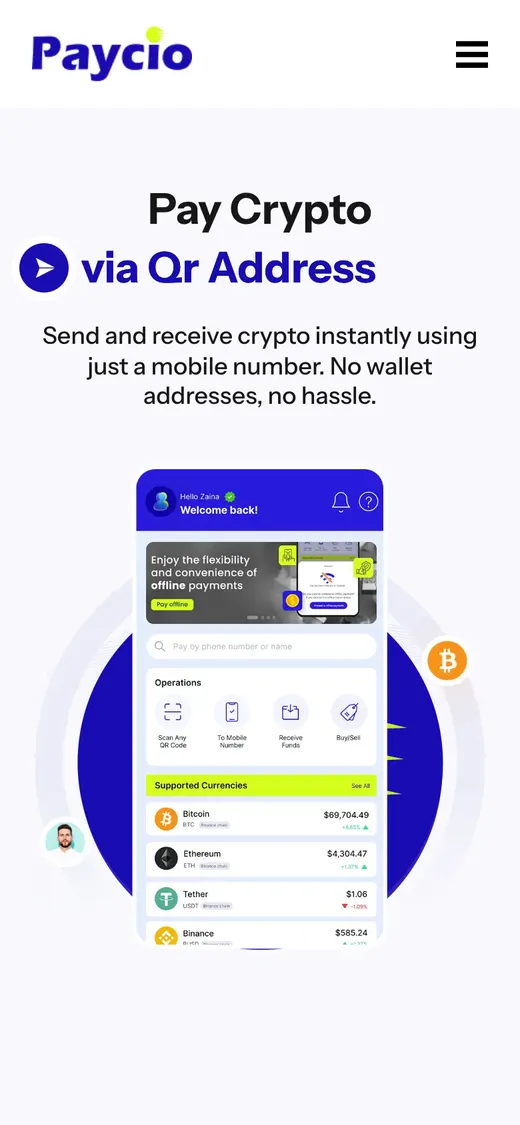
A phone number resolves to the right wallet on the right chain. Enter the amount, confirm with a PIN, done.
paycio.com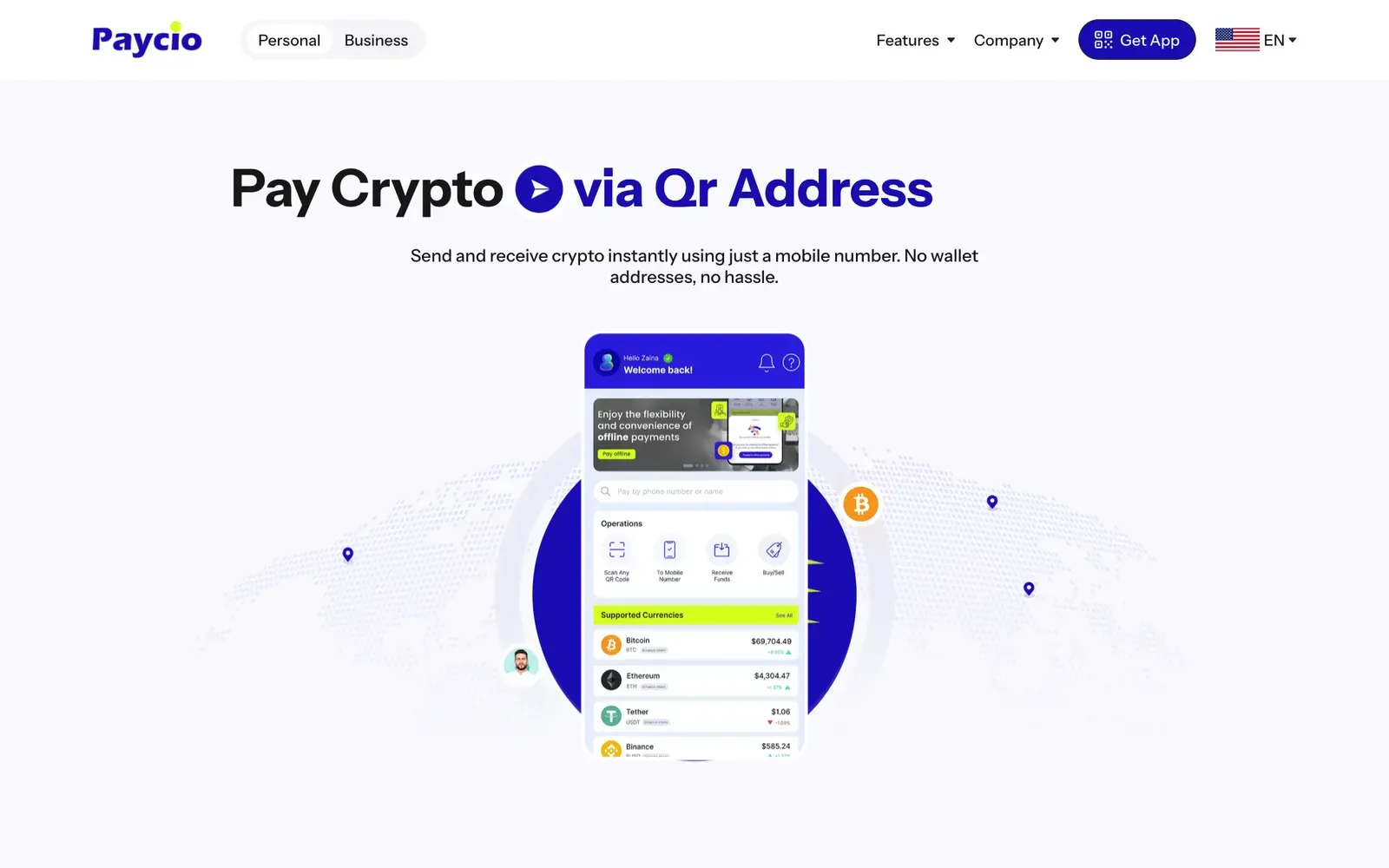
- 02
Offline payments
Signed transactions can be created without a connection and broadcast when the device is back online.
- 03
Gas in any token
Fees are paid in whichever token the user holds, with swap-to-pay handled silently in the background.
paycio.com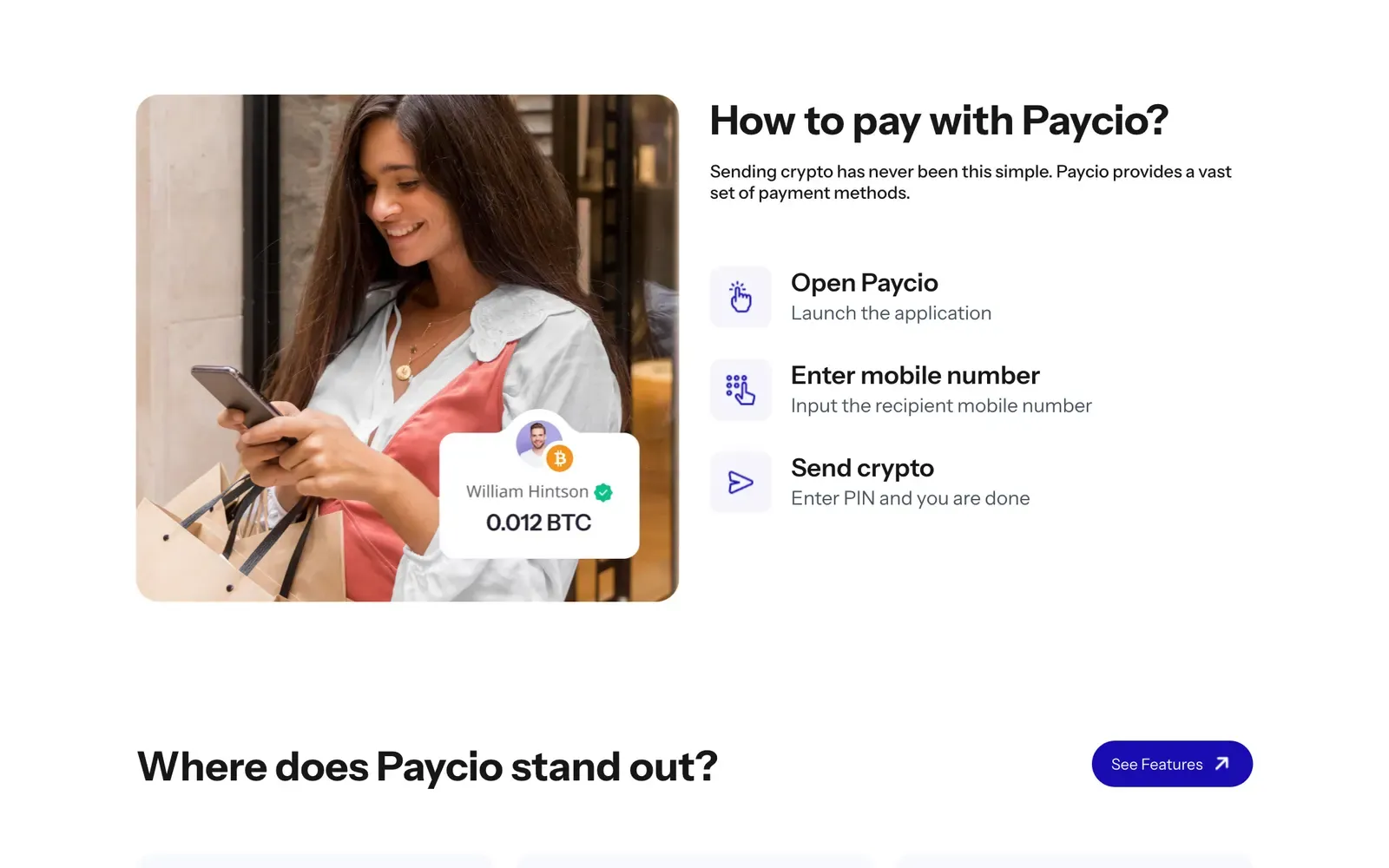
- 04
Merchant gateway and API
Checkout links, QR payments, webhooks and settlement reports so businesses can accept crypto in an afternoon.
A fintech company on a mission to make crypto usable for everyday payments, serving consumers, merchants and developers across more than 40 countries.
- Sector
- Fintech & Web3
- Reach
- 40+ countries
- Currencies
- 50+ supported
What Stood in the Way
- 01
Wallet addresses scared people off
One wrong character and the money was gone for good. Mainstream users would not risk it for a coffee or a bill.
- 02
Gas fees in the wrong token
Users held USDT but needed ETH or BNB just to move it. Transactions failed and support queues filled up.
- 03
Merchants had no simple way in
Accepting crypto meant custom integrations, volatile settlement and zero reconciliation tooling.
- 04
Security had to match a bank
Regulators, partners and users all expected strict KYC, fraud controls and a clean audit trail from day one.
From a phone number to a settled payment
What happens in the few seconds after a user taps send.
- React Native
- Node.js
- Solidity
- EVM Multi-chain
- KYC / AML Providers
- PostgreSQL
- AWS
- Step 01
Recipient entered
A mobile number or QR code, no wallet address to copy or check.
- Step 02
Identity resolved
The number maps to a verified wallet and the best chain for the transfer.
- Step 03
Fees and swaps handled
Gas is paid in the user's token and cross-chain routing is picked automatically.
- Step 04
Settled and recorded
Transaction confirmed, both sides notified and the ledger updated for reporting.
Before and After
Before
Sending crypto meant copying long addresses, holding the right gas token and hoping nothing went wrong. Merchants mostly stayed away.
After
Users send money to a phone number, fees sort themselves out, and merchants take crypto through a checkout that looks like any other.
Planning a fintech product?
Tell us what you are building. You get a clear plan, a fixed price and a team that has shipped this kind of product before.
Delivered in this engagement
- Consumer wallet apps for iOS and Android
- Merchant payment gateway and API
- KYC, fraud and compliance layer
Let's build your next product together
Book a free strategy call and leave with a clear plan and estimate. No commitment.
- 01Pick a time that suits you
- 0230 minutes on scope, stack, timeline and budget
- 03Fixed-price proposal, NDA on request